John Fisher: Productions
(More production posters at the bottom of the page)
Theatre Rhinoceros Presents
Billy
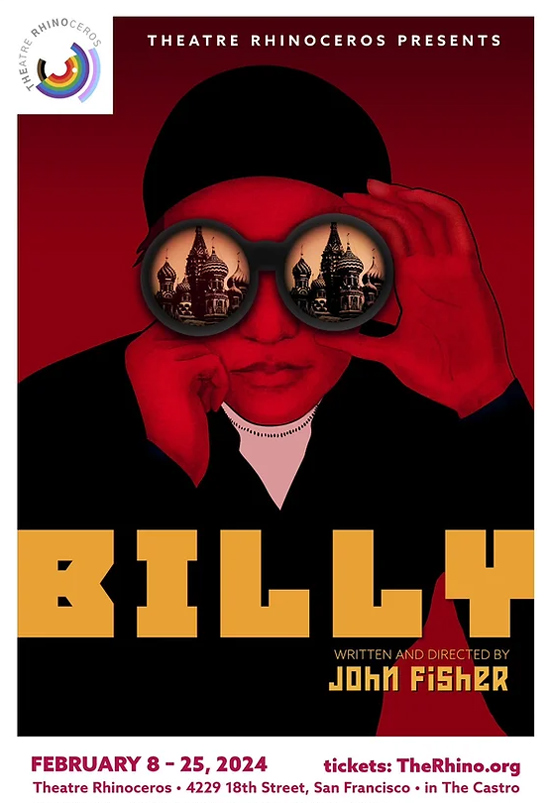
written and Directed by John Fisher
A lesbian bar. A gay disco. A mission behind enemy lines. What do they have in common? The Colonel and Day.
BIOGRAPHY:
JOHN FISHER (Playwright/Director/Actor) recently completed an eight-month run of his show A History of World War II at The Marsh, after playing two successful runs of the show in Manhattan (United Solo Festival/Theatre Row – Best Actor Award - and Pangea Performance Venue) and another in Los Angeles (The Broadwater.) He is a two-time winner of the Will Glickman Playwright Award, as well as being a recipient of the GLAAD Media Award, the Theatre Bay Area Award, two Cable Car Awards, The Bay Guardian Goldie Award, the BackStage West Garland Award, and seven Critics’ Circle Awards. His plays include the award-winning Action Hero, Shakespeare Goes to War, To Sleep and Dream, Combat! and Medea, the Musical. They have been performed in NYC, Los Angeles, Seattle, San Francisco, and Berkeley. He recently appeared as Russ/Dan in the Character Physics production of Bruce Norris’s Clybourne Park (nominated Best Performer, Broadway World 2021.) Previous COVID-19 solo-performances include Murder in Hawaii, Shark!, Doodler, A Tourist in London, Johnson, Modjeska, A Death in the Family, The Drinker, Randy!, Marie’s Crisis, Insane Director!, The Battle of Kursk, Seduction, Broke and Outta Work, Jenny, The Farm, The Swimmer and Bulge! JOHN CREATED SIXTY-TWO ORIGINAL, SHELTER-IN-PLACE, SOLO PERFORMANCES, ONE FOR EACH WEEK OF THE PANDEMIC. John Fisher recently won a citation from the 2021 Bay Area Critics’ Circle Awards Committee for his E. S. P. He recently completed a residency at the LGBTQ Center, NYC at which he created and performed six new works and performed his A History of the Civil War, Escape! and Wing Walker, among others, live at Pangea, NYC, Shark! at ArtsOnSite NYC, and four solo-shows at The Tank NYC.
"[John Fisher's JOY is a] deep purple valentine... [it] transcends happiness." Andrea Stevens, NEW YORK TIMES
"John Fisher restakes his claim as one of the most stimulating theater artists to emerge here in the past decade... [Fisher] gives his material such a confident theatrical charge that the audience feels the kind of vibrations Tony Kushner unleashed in 'Angels in America.'" Steven Winn, SAN FRANCISCO CHRONICLE
"Fisher has talent to burn... Not unlike Tony Kushner, this playwright can set his figures to talking like exclamation-pointed position papers that are both clear and funny." Dennis Harvey, VARIETY "Fisher's plays bristle with wit, intelligence, and a wonderfully developed theatrical instinct." Steven Winn, SAN FRANCISCO CHRONICLE
“No local playwright can match Fisher's enormous, voracious energy. No subject is too large or daunting: He's taken on World War II and deconstructed Shakespeare.” Rob Hurwitt, SAN FRANCISCO CHRONICLE
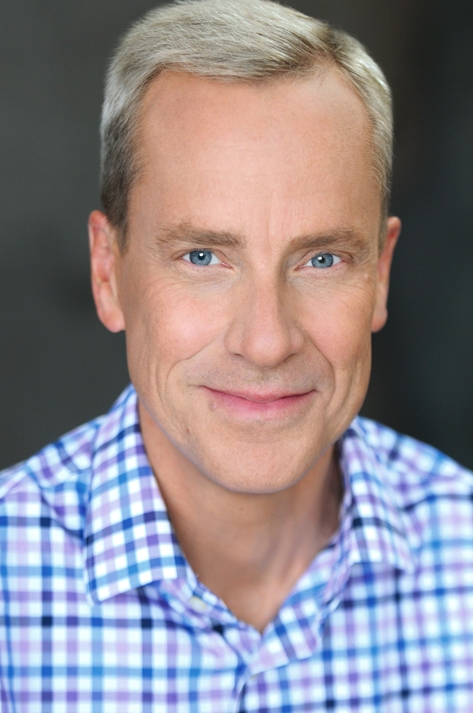
Download Photo
 |
|
John Fisher |
|
Essential Services Project
See John in the San Francisco Chronicle!

Photo: Lea Suzuki / The Chronicle
See the amazing article about Theatre Rhinoceros and other local theaters adapting to digital. Read it in The Chronicle.
ESSENTIAL SERVICES PROJECT
Solo Performances Conceived and Performed by John Fisher
John Fisher - Nominated Best Performer by Broadway World 2021
for CLYBOURNE PARK
2021 Bay Area Critics' Circle Award Winner for
"Best Solo-Performance" for the Essential Services Project
Earlier Performances Recorded live: March 2020 – December 2021
(Not all videos start at the beginning. Many have long leaders. Please cue up to the start of each video.)
You might want to watch ESPs on Facebook – some of the recordings are cleaner.
(Download a PDF of the Facebook links.)
List of Videos of Previous Performances
- SHARK
- BEDROOM (Adance to 01:00:30)
- FREDI (Advance to 01:02:20)
- REBS! (Advance to 00:59:45)
- M2 (Advance to 00:59:00)
1/22/2022 - Live Broadcast from NYC - A History of the Civil War (No video available at this time)
1/14/2022 - Performed live at Pangea, NYC - CHRISTMAS TRUCE (Advance to 00:43:30)
12/23/2021 - The LGBTQ Center, NYC - GROWN UP [Advance to 0:19:15]
- TURKMENISTAN [Advance to 00:26:00]
- BULGE! [Advance to 00:33:00]
- Assange: A Dilemma
- Hunt Hart
- Central Park Jogger [Advance to 13:20]
- BIG APPLE [Advance to 27:30]
- Romanovs [Advance to 01:02:12]
- Keith [Advance to 01:02:00)
- WILDE AND MAUGHAM[Advance to 56:00]
- NATIONAL TRUST [Advance to 53:30]
- Murder At Hetch Hetchy
- FUNGATE
- War’s End [Advance to 2:51:45]
- Kitchen Farce [Advance to 2:30:45]
- MOMMY-MOTHER-MOM
- The Battle of Ruhr Pocket
- The Swimmer
- Sutro
- Pirates Cove
- Cats
- The Farm
- Jenny
- COVID Adventure
- The Battle of Guadalcanal
- B.S.
- Moon Shot
- Contemporary Art
- Broke and Outta Work
- The Salamander
- Lone Mountain
- Seduction
- Gay Physics
- Callisthenes for Christmas
- South Sea Bubble
- Cologne
- How I Murdered My Best Friend
- Gay Pilgrim
- The Battle of Kursk
- Gordon of Khartoum
- Insane Director
- The Big Island
- Marie’s Crisis
- RANDY!
- EVEREST!
- Straight
- The Drinker
- The Fillmore
- St. John Fisher
- Dickens
- A Death in the Family
- Exercise
- Growing Up:The World in 1976
- Danse Macabre
- Modjeska
- Johnson
- PRIDE: Frank Kameny – Eyes on the Stars
- WAHOO
- The Doodler: The Finale
- The Doodler
- Kato/Cato
- General Washington
- Zoom Castastrophe
- Shark!
- A Murder in Hawaii
- The End of Orde
- Orde in Burma
- Orde in Israel
- Ode to Orde
- A Tourist in London
- A Tourist in Hawaii
Earlier Productions
Radical
Written and directed by John Fisher
ONLINE 24 x 7 !
Now through August 31st
Running time is 80 minutes with no intermission
Jack thinks you should stop paying to ride MUNI, pick up trash off the street and pee wherever and whenever you need to – that’s why he’s running for Supervisor.
Diana and Plant are trying to get him elected even as they are falling in love.
But does Jack even stand a chance?
And can Diana even trust him?!

SCOTUS* Gay
Written and directed by John Fisher
Live-Remote Reading
Tuesday, April 7 at 7 pm
Running time is 45 minutes with no intermission
Click Here and Register NOW for Tuesday’s performance
SCOTUS* GAY: Bostock v. Clayton County, Georgia, adapted from the Supreme Court transcripts and the real stories behind the case by John Fisher.
On October 8, 2019 the Supreme Court heard oral arguments about the notorious cases of men and women being fired for sexual orientation. “Will the Supreme Court decide it’s ok for workers to be fired for being gay?
At issue is a single word in Title VII of the Civil Rights Act of 1964, which bars discrimination on the basis of ‘sex’.” (Forbes, 10/24/19)
Watch the Supreme Court in action and the story behind the story.
* SCOTUS - Supreme Court of the United States

$10 Discount with the code SPF3JF$10
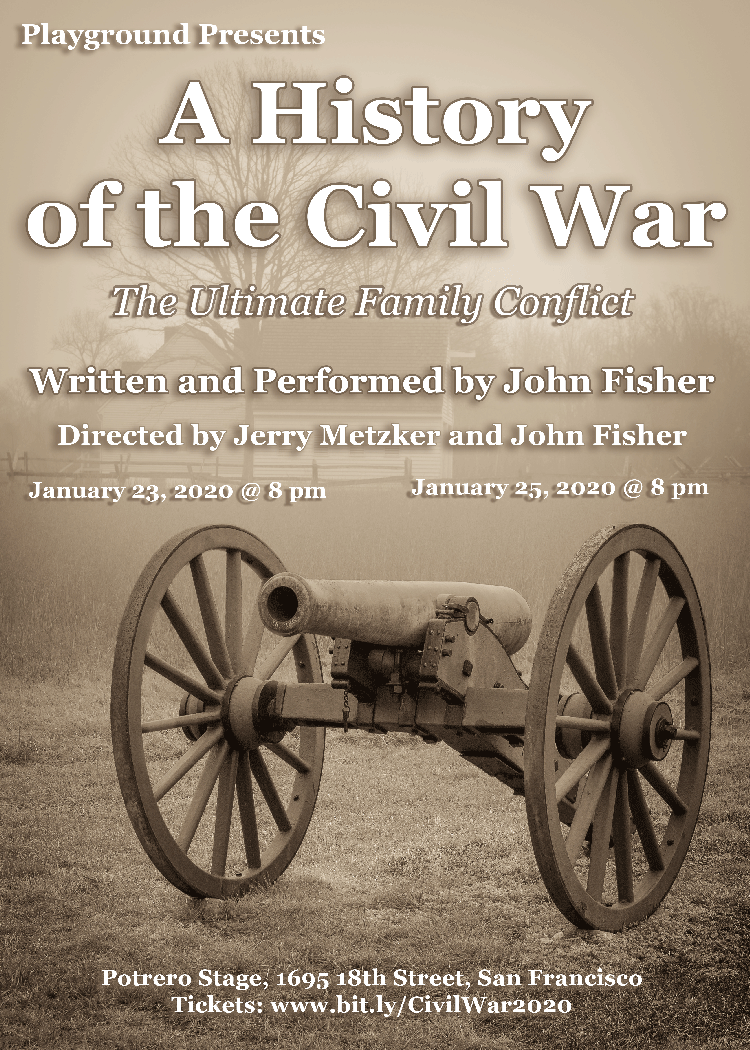
A History of the Civil War
written and performed by
John Fisher
directed by
Jerry Metzker and John Fisher
January 23, 2020 @ 800pm
January 25, 2020 @ 800pm
Playground
Potrero Stage
1695 18th Street
San Francisco, CA 94107
An incisive examination of the American Civil War framed through the childlike lens of “playing war,” History of the Civil War is an adventure story about America’s bad habit of hiding behind “states rights” when what it really means is prejudice.

A History of World War II: The D-Day Invasion to the Fall of Berlin
by John Fisher
Fridays and Saturdays at 8 pm
Now through October 26
The Broadwater Black Box
6322 Santa Monica BL, Los Angeles
John Fisher returns to bring you World War II from the Allied invasion of Normandy to the Fall of Berlin.
He also gives useful information about the best books on the subject, the cutest generals who fought the battles, and the hottest actors who played generals in the movies.

A History of World War II: The D-Day Invasion to the Fall of Berlin
by John Fisher
Fridays and Saturdays
Exended!
Now through September 28
Must CLOSE 9/28!
The Marsh, Berkeley
2120 Allston Way
John Fisher returns to bring you World War II from the Allied invasion of Normandy to the Fall of Berlin.
He also gives useful information about the best books on the subject, the cutest generals who fought the battles, and the hottest actors who played generals in the movies.
Praise from the Critics!

“A one-man fireworks display! Contagious, edifying and as theatrical as a circus!”
—Lily Janiak, SF Chronicle
From Earlier Productions of the Show
- “Top-notch solo theatre!” - FOR ALL EVENTS
- Read about the Show in the Mercury News
- John Fisher’s A HISTORY OF WORLD WAR II is SF Chronicle/SFGate Theatre Pick!
- Arts Waves - Richard Wolinsky interviews John Fisher about A HISTORY OF WORLD WAR II on KPFA
- John talks on KALW's "Open Air" about war movies, growing up in Ross, CA, and A History of World War II"
Running time: 70 minutes.

Action Hero
By John Fisher
June 6 - July 6
Phoenix Theatre
414 Mason Street
(between Geary and Post)
Jason is headed to Hollywood to become a star. There he encounters the greatest star of all time, a man of many secrets and many desires. One of them is the desire to be frightened.
Can Jason and his friend Cranston meet that challenge?
And do they really want this star’s help, given what they know about him?
Praise from the Critics!
Ross, Fisher, and Soss energetically weave all things Hollywood into compact, brilliant comic performances. A must see for anyone ready to laugh!
— Hamilton Nguyen, Theatrius
A multi-layered Los Angeles fantasia, weaving film noir motifs with a tale of contemporary young men trying to break into the movie business...
Jake Soss is again almost distractingly sexy
— Jim Gladstone, Bay Area Reporter
Masterful recreation of an adolescent's ability to use the power of make-believe.
— George Heymont, My Cultural Landscape

Deathtrap
By Ira Levin
March 22 - April 13
Wednesday - Saturday @ 8 pm.
Saturday matinees @ 3 pm
The Gateway Theatre
(formerly Eureka)
215 Jackson St
Playwright Sidney Bruhl needs a hit, desperately.
Is he willing to kill to get it? Will his wife help him?
How far will their nerve take them? And what will handsome Cliff’s reaction be when he finds out?
A Theatre Bay Area Recommended Production!!

A History of World War II: The D-Day Invasion to the Fall of Berlin
by John Fisher
The Marsh
1062 Valencia
John Fisher brings you World War II from the Allied invasion of Normandy to the Fall of Berlin. He also gives useful information about the best books on the subject, the cutest generals who fought the battles, and the hottest actors who played generals in the movies.
- “Top-notch solo theatre!” - FOR ALL EVENTS
- HISTORY is a Theatre Bay Area Awards Recommended Production!
- Read about the Show in the Mercury News
- John Fisher’s A HISTORY OF WORLD WAR II is SF Chronicle/SFGate Theatre Pick!
- Arts Waves - Richard Wolinsky interviews John Fisher about A HISTORY OF WORLD WAR II on KPFA
- John talks on KALW's "Open Air" about war movies, growing up in Ross, CA, and A History of World War II"
Running time: 70 minutes.
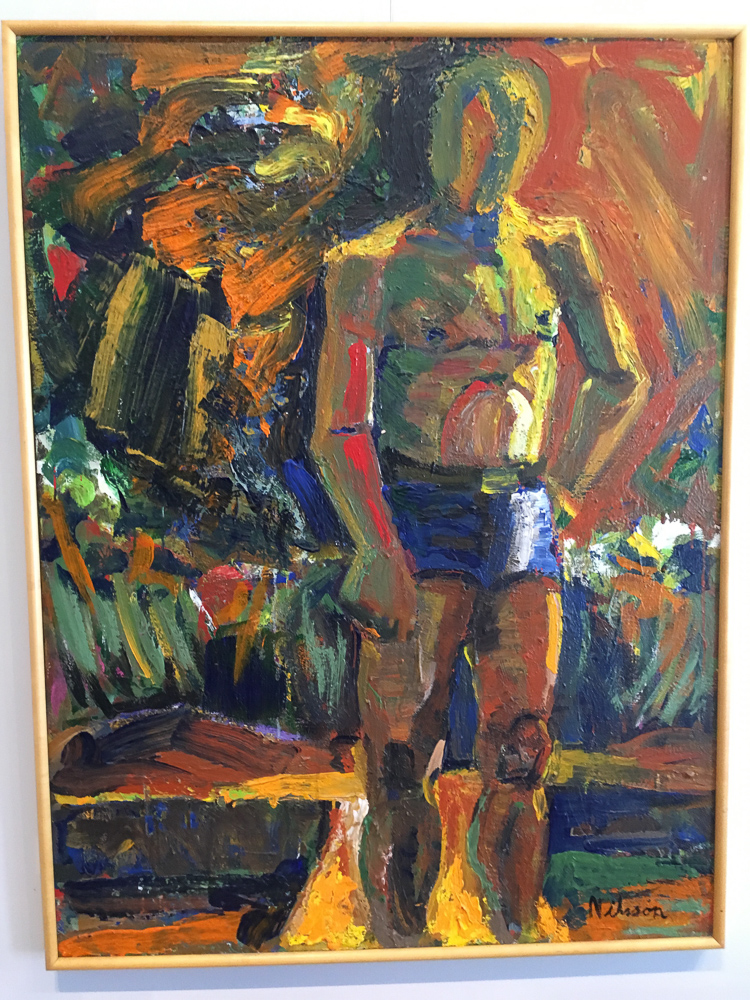
Painting: My Father by Rob Nilsson
Used by Permission of Artist
On view at SparkArts Gallery
Painting owned by Marshall Spight of
Meets the Eye Studio.
December 3, 2018 —
One Show Only
John Fisher as
THE SWIMMER
by John Cheever
A Word-for-Word Reading
@ ZSpace
In New York!
A History of World War II: The D-Day Invasion to the Fall of Berlin
by John Fisher
Tuesday, September 18 @ 900pm
Theatre Row, New York City
John Fisher returns in his Award Winning Performance to the United Solo Festival in NYC Special Encore Performance
To purchase tickets on-line go to this link and scroll down to History of World War II
To purchase tickets by phone, call 1-212-239-6200 and say you want tickets for "The United Solo Theatre Festival 2018" on Tuesday, April 18 for the 9 pm performance.
United Solo 2017
John Fisher brings you World War II from the Allied invasion of Normandy to the Fall of Berlin. He also gives useful information about the best books on the subject, the cutest generals who fought the battles, and the hottest actors who played generals in the movies.
Running time: 70 minutes.
 Download graphic

 Second Venue!
A History of World War II: The D-Day Invasion to the Fall of Berlin
by John Fisher
Presented by pangea
Friday, September 28 @ 7 pm
Friday, October 5 @ 7 pm
178 Second Ave
(between 11th & 12th Streets)
Transitions
by John Fisher
February 13 – March 17, 2018
The Gateway Theatre
215 Jackson St

A surprising relationship between a young Republican and a no-nonsense drag queen almost set the world on fire. But in a moment of international crisis this romance might just save the planet, as Donald Trump and Vladimir Putin are about to find out. A satirical drama ripped from the world’s headlines in the tradition of filmmakers Billy Wilder and Oliver Stone.
 The Normal Heart
by Larry Kramer
Directed by John Fisher
November 3 – 25, 2017
The Gateway Theatre
215 Jackson St
A searing drama about public and private indifference to the AIDS plague and one man’s lonely fight to awaken the world to the crisis. Produced to acclaim in NY, London and LA. The Normal Heart follows Ned Weeks, a gay activist enraged at the indifference of public officials and the gay community. While trying to save the world from itself, he confronts the personal toll of AIDS when his lover dies of the disease.
Originally published in 1985 and celebrated in a passionate and eloquent 2011 Broadway revival. https://en.wikipedia.org/wiki/The_Normal_Heart

Pricilla, Queen of the Desert
The Musical
By Stephan Elliott and Allan Scott
May 27 – July 2, 2017
Eureka Theatre, 215 Jackson San Francisco Map It
The glorious musical adventure about trannies, drag shows, Down Under, and what we will do for love.
Lear!
An Outdoor Shakespeare Adventure
 Esplanade, Yerba Buena Gardens
761 Mission Street Map It
Lear! is Shakespeare’s King Lear with the various locales in the park serving as the playing area.
Shakespeare’s play is reduced to ninety-minutes and traverses the plains of Yerba Buena Gardens as it tells the exciting and heart-breaking story of one man’s attempt to divide his kingdom and his family’s gut wrenching struggle for power and love. This is not a musical, it is not farce, it is Lear! – with Shakespeare’s original text – performed like you’ve never seen it before.
Flim-Flam
Written and Directed by John Fisher
February 24 – March 18
Eureka Theatre, 215 Jackson San Francisco Map It
Three desperate actors take to the road in search of roles. Along the way they encounter highway hooligans, porno shoots, offended politically-correct youths and “all the crazies” of America. “All the world’s a stage” and it’s an actor’s nightmare in this comedy about America “trying to be great again.”

Equus
by Peter Shaffer
directed by John Fisher
November 25 - December 10
Eureka Theatre, 215 Jackson San Francisco Map It
The explosive play about suppressed sexuality that took critics and audiences by storm, Equus is a timeless classic and a cornerstone of modern drama that delves into the darkest recesses of human existence.
Present Laughter
By Noël Coward
Eureka Theatre
215 Jackson St. @ Battery in
San Francisco
A Song at Twilight
By Noël Coward
Z Below Theatre (470 Florida St. between 17th and 18th Streets)
January 20-31, 2016
SHAKESPEARE GOES TO WAR
Written and Directed by John Fisher
November 4-28, 2015
Thick House
1695 18th Street
San Franciosco, CA 94107
www.TheRhino.org
Shakespeare Goes to War is a Hit with the Critics!
***** -- 5 Stars
Fisher succeeds in enlightening us about theater, Shakespeare, acting, Brecht, WWII, history, teaching, learning, coming out, racism, and gay repression...
The dialogue is crisp, witty, and thought-provoking, giving us insights into theater, war, and heroism in the classroom and in political life.
— Barry David Horwitz – TheatreStorm Full Review
Powerful
very clever
John Fisher has created a moving “thank you” to the mentors that inspired him to go into theater. The thankless job of being a teacher and inspiring youth. The Briggs years have passed and gay teachers have it a bit better, and any teachers inspiration to youth is exceptional.
It is a touching tribute to Fisher’s gate to theatre - and I highly recommend this show. it is a great way to celebrate your Thanksgiving break..
— Vince Media – vmediabackstage.com
This is the kind of writing that should inspire more people to consider making Theatre Rhinoceros (a/k/a "the longest running LGBT theatre anywhere") a beneficiary in their wills.
Based on the merits of Fisher's latest work (a psychologically complex and multi-layered drama with frequent flashbacks), I see no reason to exclude him from a long list of prolific LGBT playwrights that includes Edward Albee, Jon Robin Baitz, Terry Baum, Douglas Carter Beane, Eric Bentley, Adam Bock, Charles Busch, Stuart Bousel, Noel Coward, Harvey Fierstein, Lorraine Hansberry, Moises Kaufman, Larry Kramer, Lisa Kron, Tony Kushner, Arthur Laurents, Charles Ludlam, Taylor Mac, Terrence McNally, Joe Orton, Paul Rudnick, Paula Vogel, Lanford Wilson, Oscar Wilde, and Tennessee Williams.
...
In an era when teachers are being demonized as soulless leeches who don't deserve to be paid with taxpayer dollars, Shakespeare Goes To War does a splendid job of showing how the most unlikely person can turn into a life-changing mentor.
At its core, Shakespeare Goes To War is a beautifully crafted tale about the art of mentoring, the gift of learning, the power of self-realization, and the magic of theatre that should be seen by students and teachers everywhere.
— George Heymont – mycultural landscape.blogspot.com
With the play frequently traveling between time and place, Fisher makes ingenious use of the Thick House theater space.
Fisher can usually be counted on to write at least one new play each season for Theatre Rhino, of which he is executive director, and Shakespeare Goes to War is one of his strongest plays in years.
From the intriguing symmetry of scenes past and present to the emotional richness of the main characters, he finds a comfortable mix of the comic and the serious. Scenes in the POW camp can indeed be funny, not because of the circumstances, but through human idiosyncrasies on both sides of the war. And there is, as one might expect, plenty of humor in the high school scenes, but there are also leaden clouds hovering.
— Richard Dodds – Bay area reporter - ebar.com
Touching…heartfelt…comic…
Fisher explores various worthy themes: mentor/mentee relationships, especially when the mentor is deeply flawed; the value of art and its relevance to real-world concerns; coming-of-age struggles; racism and homophobia.
— Jean Schiffman – SF Examiner.com
A montage of several, compelling stories; but at its heart, it is about a man’s enduring love and admiration for a teacher who gave him a life’s worth of inspiration in two separate semesters of his freshman and senior years.
... captivating, entertaining, and rewarding.
Gabriel A. Ross…is both hilarious and impressive in his performances.
For anyone, who is most everyone, who has that one teacher or mentor whose image and voice still vividly play out periodically in your mind’s stage as an inspiration to be your best self, Shakespeare Goes to War is written for you and should be seen in this premiere of Theatre Rhinoceros.
— Eddie Reynolds – theatreeddys.blogspot.com
Compelling, provocative, and of full flesh. Numerous issues of great import are revealed, but in a truly entertaining fashion, with nuance and balance rather than the didactic tone that many "meaningful" storylines take.
This thoughtful theatrical piece works on a number of levels. Not only does it raise numerous social issues, but no situation that is introduced is reduced to a facile analysis and conclusion. The playwright recognizes the complexity of who we are; the issues we face in life; and the frequent contradictions of our beliefs and actions. … It should be seen by many, and it will have most talking about it all the way home and more.
— Victor Cordell – forallevents.com
Shakespeare Goes to War, a new work by Theatre Rhinoceros Executive Director John Fisher, now playing at the Thick House, is almost exactly what Bay Area theater needs: a homegrown production filled with promise and possibility.
As Jack Fletcher and the young Harry Smith, Gabriel A. Ross is terrific—especially in the plays within the play, school and prison camp productions of Romeo and Juliet, Richard II, Othello—where he brings real zeal to the roles, especially the distaff ones. Kevin Copps also does terrific work playing a variety of roles, especially a brief turn as Ronald Reagan.
John Fisher directs as well, and he does some excellent work, bringing real kinetic energy to the action, which takes place up and down a series of stair steps that make up the set.
But perhaps his most charming directorial choice is to have all music and sound effects created by cast members standing at the back of house.
Worth your time.
— Patrick Thomas - Talkinbroadway.com

"John Fisher does terrifc double duty both directing and playing Turing... Breaking the Code is far more satisfying and fulfilling than [The Imitation Game.]
Leslie Katz, San Francisco Examiner
Return engagement of The Rhino's Hit Production
Now through August 29 Only
Eureka Theatre, 215 Jackson Street, SF
For Tix: www.TheRhino.org/1-800-838-3006
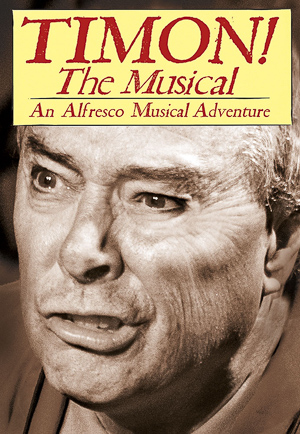
Timon! The Musical
Book and Lyrics by John Fisher
Music by Don Seaver
Produced by Yerba Buena Gardens Festival
@ Yerba Buena Gardens, San Francisco
Friday, June 5 @ 700 pm
Saturday, June 6 @ 700 pm
Sunday, June 7 @ 100 pm
http://ybgfestival.org/event/timon/
2014:

The Battle of Midway! Live! Onstage!
Book and Lyrics by John Fisher
Music by Don Seaver
Plays through November 30, 2014 Only!
@ A.C.T.'s The Costume Shop
1117 Market Street @ 7th Street
San Francisco, CA 94102
Tickets: www.TheRhino.org or 1-800-838-3006
IN MAY....
To Sleep and Dream wins the 2013 Bay Area Critics' Circle Award for Best Original Script on Monday May 5, 2014 at the California Ballroom.
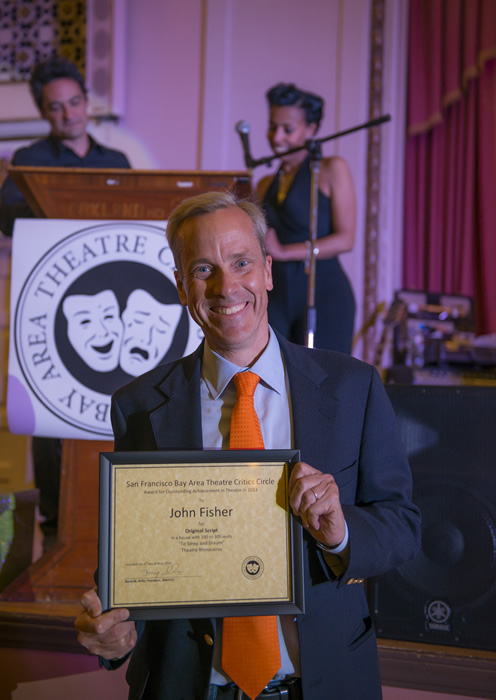
2014: Submitting my play Hackett Straight (about PT-Boats in the South Pacific) to the Yale Drama Series. Recently submitted my play Pirates! (gays hijakced by Somalis) and a new play about growing up to Playwrights Horizons and The Rattlestick Theatre. Writing a play about the AIDS crisis and adapting a Shakespeare into a camp musical.
September 19 - October 6, 2013
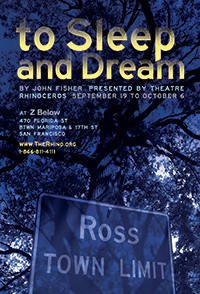
To Sleep and Dream
Written and Directed by John Fisher
At Z Below
470 Florida Street
San Francisco, CA
"Powerful! Provocative Performances!"
SF Examiner

Drunk Enough to Say I Love You?
By Caryl Churchill
Directed by John Fisher
Extended! - Now through June 23rd
At The Costume Shop
1117 Market Street
San Francisco, CA 94102
For Tix: www.TheRhino.org
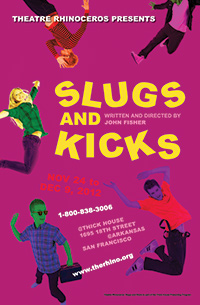
Slugs and Kicks
A New Comedy
Written and Directed by John Fisher
Thick House
1695 18th Street @ Arkansas, San Francisco
November 24 - December 9, 2012
www.TheRhino.org
A Lady and a Woman
By Shirlene Holmes
Directed by John Fisher
Eureka Theatre
215 Jackson Street @ Battery, San Francisco
March 2013
Something Cloudy, Something Clear
By Tennessee Williams
Directed by John Fisher
Eureka Theatre
215 Jackson Street @ Battery, San Francisco
January 2 - 13, 2013, Extended to January 20th!
www.TheRhino.org
100 Saints You Should Know
By Kate Fodor
Directed by John Fisher
Thick House
1695 18th Street @ Arkansas, San Francisco
May 31 - June 16, 2012
www.TheRhino.org
Sorry Fugu
By T. C. Boyle
Adapted and Directed By John Fisher
France Tour
Salle Adyar, Paris
March 2012
Plus Nancy, Angers and Nantes
A Word-for-Word Production
www.zspace.org
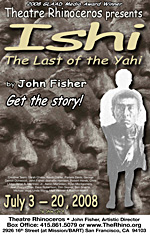
Ishi: The Last of the Yahi
Written and Directed by John Fisher
Zellerbach Playhouse
March 4 - 11, 2012
A UC Berkeley Production
http://tdps.berkeley.edu/productions-events/main-stage-season/
Food Stories
"Sorry Fugu" by T. C. Boyle and "Enough" by Alice McDermott
Adapted and Directed by John Fisher
Z-Space Theatre
January - February 2012
A Word-for-Word Production
www.zspace.org
The Two-Character Play
By Tennessee Williams
Directed By John Fisher
January 4 - 14, 2012
Eureka Theatre, San Francisco
www.TheRhino.org
SexRev Redux
Return engagement of SexRev: The Jose Sarria Experience
Written and Directed by John Fisher
CounterPULSE
November 10-December 4, 2011
www.TheRhino.org
"Sorry Fugu"
By T. C. Boyle
Adapted and Directed by John Fisher
Savory Thymes Fund Rasier
September 24, 2011
A Word-for-Word Produciton
www.zspace.org
Julia
By Lillian Helman
Adapted and Directed by John Fisher
A Word-for-Word "Off-the-Page" Production
August 2011
A Word-for-Word Production
The Jewish Theatre, San Francisco
www.zspace.org
Fighting Mac
The Story of Hector MacDonald
Written and Directed by John Fisher
June - July 2011, Thick House, San Francisco
SexRev: The José Sarria Experience
Written and Directed by John Fisher
(The Voice Factory, San Francisco: April 2010) is...
[And here's the whole review from Robert Avila at The Guardian:]
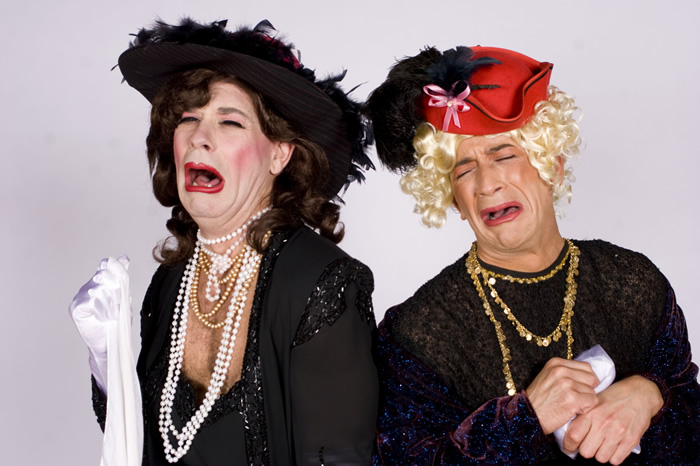
(Tom Orr and Mike Vega as Josés in grief)
Theatre Review: Robert Avila
"Are You Experienced? Theatre Rhinoceros mounts Sexrev: The José Sarria Experience
"José Sarria is many things: performer, activist, trailblazer, legend, Latino, diva, tenor ... So just how many José Sarrias are there? In the latest meta-theatrical reclamation-and-floorshow from playwright-director John Fisher (Medea: The Musical, Combat; Ishi: The Last of the Yahi) you'll meet several but get no strict count. That's part of the point and much of the charm in SexRev: The José Sarria Experience, a production of Theatre Rhinoceros, currently ensconced in residency at queer performance incubator Mama Calizo's Voice Factory.
"First, there's the Sarria of memory, in the mind of our ingenuous, ebullient narrator (Donald Currie), a gay man in middle age reminiscing about his precocious sexual awakening via "the Nightingale of Montgomery Street" in a certain storied postwar/Beat-era bar known as the Black Cat Café. At one point in this fourth-wall–smashing show, staged in the round as the invitingly sleazy Black Cat itself, audience members are invited to share their own first-hand impressions of the pioneering San Francisco drag performer and gay rights activist.
"Then there are the Sarrias we meet on stage, played to the hilt by Tom Orr and Michael Vega. Each actor is responsible for an aspect of the Sarria "experience," but in the insouciant critical consciousness of Fisher's play, that doesn't necessarily mean it will go unchallenged. "But José Sarria was brown!" shouts a "heckler" at Orr. "You're not brown." The contradiction and ensuing kerfuffle provide Fisher and the audience one way into the continuing political relevance and volatility of his subject matter, of course, and some productive laughs come out of it too. Add to this the real possibility of the "real" José Sarria showing up in the audience one night, and you get a sense of the tangled politics of art, and art of politics.
"Frenetically staged, often very funny, endlessly self-referential, and indeed — as one character doesn't hesitate to complain — a bit long, "SexRev" moves fitfully back and forth across the last several decades of San Francisco queer life and politics. But as a history lesson, a widening of horizons, and a spur to political vigilance on behalf of freedom for everyone, it's a hell of a lively night out." (Guardian, April 5, 2010)
This production also was favorably reviewed by Richard Doods in the Bay Area Reporter and by Sister Dana in the Bay Times.
Two on a Party (Salle Adyar, Paris and on tour in France)

(Sheila Balter and Ryan Tasker in Two on a Party)
John Fisher directed and adapted this story which the SF Chronicle descirbed as "warm and funny" for its revivial at Theatre Artuad in March and for its tour of France in March and April 2010. He was at the Paris performaces to answer questions about the show.
Three on a Party (San Francisco: Summer 2009) is...
“Warm and funny, ” from the “giddy… wild word play” and “decadent sensuality” of Miss Furr and Miss Skeene and the “touching… very well performed… sexual tourism” of Two on a Party, to the “affecting slice of [San Francisco] life…” of Almost Home. [The Little Man is clapping!] (San Francisco Chronicle)
"Party trio brings out best in Word for Word, Rhino... there's nothing bettter." (Chad Jones, Theaterdogs.net)
Oscar Wilde's The Picture of Dorian Gray
(Eureka Theate, San Francisco: 8/26/10-9/19/10)
Adaped and Directed by John Fisher
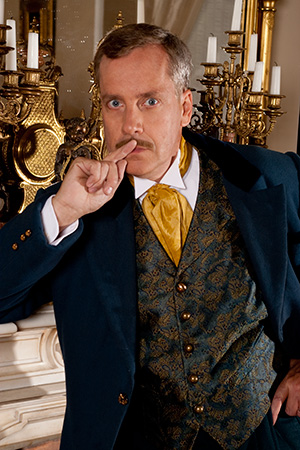
(John Fisher as Lord Henry in Oscar Wilde's The Picture of Dorian Gray)
Ishi: The Last of the Yahi (San Francisco: July 2008) is...
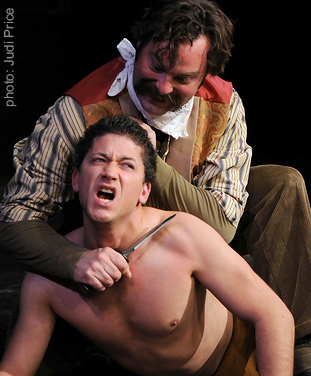 "Gripping and remarkarbly effective... staged with [Fisher's] usual proficiency." [The Little Man is clapping!] (Robert Hurwitt, San Francisco Chronicle)
"[Ishi] offers absorbing, imaginative anylysis of thorny ethical issues." (Dennis Harvey, Variety.)
Ishi named by Richard Dodds in the Bay Area Reporter: Best on Bay Area Stages Top 10 Offerings in 2008
Schonberg (Bleecker Street Theatre, New York City: August 2008)
"It might help to go into this sharply etched two-hander already knowing that Arnold Schönberg was a severe Viennese composer living in, of all places, Los Angeles, and that Oscar Levant, celebrated wit of radio and movies, was his piano student. But all you really need to know is that both were Jewish—with different strategies for passing in 1932’s preapocalyptic climate. The former escaped the Nazis, then fell into a deep cynicism; the latter hid behind a thick scrim of one-liners and desperate shtick. As played, respectively, by the play’s author, John Fisher, and his troupe’s assistant artistic director, Matt Weimer, these uneasy associates come to life in bristling, neurotic parlor chats, sharing a bond of anxious subtext that takes on a touching resonance as the play progresses. (Joshua Rothkopf, TimeOut New York.)
"This play by John Fisher imaginatively reconstructs meetings between Oscar Levant and Arnold Schoenberg that took place during WWII. It’s an engrossing glimpse at a circumscribed relationship between two very different Jewish musicians. As it opens Levant provides brief information to bring us up to speed on his own and Schoenberg’s backgrounds. Good move. The short series of compelling exchanges that follows reveals much about both men as it contrasts their personalities and approaches to life and art. Oscar Levant, unsure and attempting to be ingratiating, asks Schoenberg to teach him the art of composition. A musical revolutionary and demanding disciplinarian, Schoenberg calls Levant an entertainer, a neurotic and a clown, while admitting to paranoia himself. War film footage, including horrific concentration camp pictures, plays in the moments between meetings. The play shares a basic format with My Dinner with Andre (which, though it prompts questions like, where can I get the action figures, is nevertheless an absorbing film for enthusiasts). At times this comes across as Fisher taking an opportunity to present a collection of Schoenberg aphorisms, and it absolutely depends upon brilliant acting and direction in order to work. Fortunately, John Fisher and Matt Weimer are superb." (Kathryn Osenlund, Curtain Up.)
The Rhino Christmas Panto (San Francisco: December 2008)
"Rhino Christmas Panto, the latest show at San Francisco’s Theatre Rhinoceros, captures the spirit of the Mission, gay pride, and Christmas in one neat little package. A Gay Christmas Show? The idea may seem a little farfetched... but this show has something for everyone - music, dance, drag queens, guys in small undies, and even Jesus.
"The show follows Aaron (Aaron Martinsen), a jaded bitter gay man who learns the true meaning of Christmas through a whirlwind tour of history that includes a quick trip to Bethlehem, a visit with Emperor Constantine, a small town in Iowa, 1960’s San Francisco, and Oakland in the future. One of the show’s conceits - and a brilliant one - is its audience participation. Rachel the Christmas Fairy (Rachel L. Jacobs) cracks inside jokes and generates interactive moments. There’s even a Bingo game!
"The Theatre Rhinoceros is America’s longest running professional queer theatre. Also, as you may hear if you see the show, it has officially seceded from California State because of the passing of Proposition 8. That being said, the show doesn’t get too preachy or political. Rhino Christmas Panto actually celebrates the ways we can have pride in our history and enjoy Christmas as queer men and women.
 "The idea may seem a little farfetched but this show has something for everyone - music, dance, drag queens, guys in small undies, and Jesus.The production values are a little low but the show is well-written. The show even comments on the production values suggesting that everything handmade with love usually looks janky. The music is insightful and the lyrics are well conceived. The show really does evoke some emotion. The trip through time can seem a little random, but the audience participation helps you really start to love the characters.
"Despite the show’s inability to have an Broadway-style set, the actors really shine. The group has great comedic timing and dance skills. Some of the standouts include Nicholas Yenson who dances throughout the production playing memorable characters like Jesus and a young boy who runs away to New York City and falls in love with Carol Channing. Jordan L. Moore shows his versatility playing diverse parts (and looking stunning throughout) including The Virgin Mary, Carol Channing, and a dominatrix fairy (yes, you read that right). The stand-out is Rachel L. Jacobs whose sweet demeanor and amicability enamor you throughout the show.
"Filled with local flair and a lot of Christmas spirit, Rhino Christmas Panto explores what it’s like to be gay on Christmas and how we can all be happy and celebrate the true meaning of Christmas. Go see it!" (Christian Cintron, EDGE.)
"The mimicry of everything originated in ancient Greece, survives as a Christmas tradition in Great Britain and its spirit is now brought to The Rhino stage by Director John Fisher. The Rhino Christmas Panto includes many of the standard elements of pantomime, including messy substances and gender confusion, but it is also specific to San Francisco and the LGBT community. The show is a musical revue which explores widely, from the birth of Christ to hippie-era SF to Oakland in the future. The predominant theme is embodied in the opening song, “Christmas is for Queers.”
"Rachel, a Fairy with wings (Rachel Jacobs), leads the show and instructs the audience members to shout, “Hey, Rachel. I’m a fairy.” She is accompanied by Aaron (Martinsen) a fairy with gold wings. He has issues. She leads him in his journey to discover himself. Along the way there is the typical panto fare of physical comedy and multiple characters with costume changes played by a cast of eight, to piano accompaniment. The characterizations range from “a Mission boy” to a black-clad dominatrix to a drag impersonator of Carol Channing (Jordan L. Moore).
"The small, chirpy powerhouse Rachel engages the audience in much lively participation, and carries the show masterfully with her improvisations.
"Sometimes the opening-night audience became overly rowdy, but she was able to shush them. On a set of flats with snowflakes and Christmas lights, she led the action from New York to Bethlehem to ancient Rome. The song interludes (written by James Dudek) are specific to each location. The action begins on Liberty Street on Christmas Eve with the ensemble’s opening number, which lends a sense of openness and empowerment. When they move to Bethlehem, Christ (Nicholas Yensen) pops out of Mary’s womb, dragging along his umbilical cord. He snaps it off, then proceeds to use it as a jump-rope before he launches into “It’s My Birthday.” In 60s SF, Rachel persuades the audience to join hands and sing along to “God Bless Us Nelly Queens.”
"Other audience participation involves the appearance of Norman Muñoz as Emperor Constantine in ancient Rome, accompanied by a lion in costume (Amy Dietz) and pagans with a skull and bones of Christians. Rachel told the audience to shout out, “Look out! There’s a Roman behind you,” whenever they saw the Emperor, which the audience enthusiastically did. Another bit involved gay bingo. The moderator says he wants “gay men to find some way of interacting other than sex and drinking.” They pass out bingo cards and beans as markers, then roll the numbered balls around in a cage until someone claims to bingo. Aaron finally phones his former lover who says he’s in bed with a guy right now. Later he comes in and reveals that he lives downstairs, and there is no other guy. “I’ve been stalking you for six months.” They reconcile, hug.
"The finale returns to Liberty Street for a reprise of “Christmas Is for Queers,” complete with bubble machine. The ensemble performances include an Ox, a Cute Boy in the Mission, a Lamb, a Random Drunk Lesbian, and Oakland Queers. It’s all good fun and very fast paced. John Fisher wanted to use the word panto to signify that almost anything goes, although as Rachel said when Aaron called the show “janky,” “This is a family show,” but there were no children in the audience. Most of the humor would be lost on younger people, except for the extended pie-in-the face lazzi routines. Albert Goodwyn, SF Bay Times.)
Medea: The Musical (San Francisco, Los Angeles, HBO) is...
"Exuberantly funny!... Bristles with wit, intelligence, and a wonderfully developed theatrical instinct... Fisher and his troupe are the real thing: catch them on their way up!"
[The Little man is leaping out of his chair!] (Steven Winn, S.F. Chronicle.)
"Riotous slapstick! As smart as it is sassy, as hip as it is hyper, and wonderfully provocative in just about every sense of the word!" (Robert Hurwitt, S.F. Examiner.)
A dazzling display! Executed with such performance panache that you gasp with gratitude... Iresistable!" (Dennis Harvey, Variety.)
The Joy of Gay Sex (San Francisco, New York, Los Angeles) is...
"A sweet/harp roundelay charting several students' tangled liasons. More in tune with Noel Coward or Woody Allen (especially Manhattan) than Gen X studies, this precocious work suggests commercial instincts alrady honed well beyond strictly gay audience appeal... Memorable lines zing out constantly; the fourth wall is frequently crashed. It credits Fisher's talent that these gambits seem fresh rather than forced. Joy's wit and charm shine brightly."
(Dennis Harvey, Variety.)
"Positively giddy in its imaginative flourishes!"
(New York Post)
"Wittey, wry, tightly constructed and surpisingly affective. John Fisher has a flair for dialogue and a gift for narrative."
(Associated Press.)
"Joy takes audiences on an effervescently romantic ride!"
(BackStage.)
"Well crafted and poignant. Joy is entertainment done with style!"
(Daily Variety.)
Combat: An Americna Melodrama (San Francisco, Berkeley) is...
"A Berkeley drama department grad student and lecturer, John Fisher took the Bay Area theater scene by storm last year with two brilliantly realized romantic comedies, "The Joy of Gay Sex" and "Medea: The Musical." His first drama, "Combat!," may yet prove to be the great gays-in-the-military play numerous stage scribes have attempted over the last several years; it's two-thirds there. Engaging, witty, resourceful, this 3 1/4-hour script requires only editorial fine-tuning to pull its cinematic sweep into sharp focus.
"Combat!" is already worthy of play on any first-rate regional stage. (Why American Conservatory Theater or the Berkeley Rep haven't pelted this fast-rising author with commissions is a mystery only terminal cluelessness or local-talent distrust can explain.)
"It unfolds its epic saga on three central narrative planes, one of which is fact-based. The period is World War II, from preliminaries to aftermath. Dr. Harry Stack Sullivan (Paul Tena), once America's most famed psychiatrist, helps introduce a psychiatric exam to the Selective Service screening process. But to his horror, other powers include homosexuality as a mental-illness disqualification. A gay man himself, Sullivan protests.
"The other principal threads are imagined romances. Marine enlistee John (Christian Milne) experiences his first gay kiss, and then true love, with squad mate Mark (Jeremy Proctor). Meanwhile, John's ex-girlfriend, Susan (Kegan Stedwell), joins the WACs, where she, too, finds same-sex life partnership with Maj. Beverly (Elsa Wolthausen).
"The playwright's grand design encompasses famous battles as it cartwheels between these stories and larger events. A lone black Marine recruit (Darryl Stephens) adds another dimension to the notion of patriotic, institutional prejudice. Past history, and the United States' willful wartime ignorance of Final Solution rumors, are also referenced, to powerful effect.
"Fisher's main thesis indicts this first explicit anti-gay military policy as setting a precedent that would reverberate for decades, in many arenas. The American Psychiatric Assn., for example, didn't drop homosexuality from its list of disorders until the 1970s.
"Throughout a long first act, "Combat!" juggles myriad elements, with engaging , witty, resourceful, cinematically sweeping results. Those qualities remain thereafter, but Fisher's focus dissipates. When we ought to get closer to individual dramas, he instead pours on figures talking like position papers, riskier shifts in tone and problematic stage gambits. Some work wonderfully. Others feel forced. A reincarnation/love-beyond-death twist is sweet but stands out oddly as the play's single fantasy touch. More troublesome are the many roles (Mark Twain-inspired Devil, FDR, Gandhi, an inexplicable drum-majorette type) played by Jane Paik; their sardonic narration has a campy, Brechtian tilt that cheapens the play as a whole.
"Assistant director/choreographer Paik does lay claim to the show's giddiest interlude, a marvelous war-game maneuver staged in finger-snapping mock jazz-ballet style. With 24 actors playing multiple roles on designer Kate Edmunds' often bare stage (a huge rising/sinking platform is the major scenic component), "Combat!" wears its occasional rough edges well.
"The principals are quite fine; the minor roles sometimes betray student talent. Fisher gives himself a plum role as tough-love D.I. Jake Tower, a spectacular mix of fussy-uncle Paul Lynde and Full Metal Jacket's psycho-sarge Lee Ermey. He's superb.
"'Combat!' feels like a vast screen epic viewed in messy first cut. It needs work, but the expansiveness and substance are already there. Major regional theaters might be wise to sniff out the potential before they're trumped.
(Dennis Harvey, Variety)
"DAZED, scared and determined, a unit of U.S. Marines is pinned down by enemy fire at the edge of a beach on Betio Island, Tarawa Atoll, in the middle of World War II. One has a gaping wound in his cheek; another, a shattered arm. Their sergeant is barking out crisp commands, trying to figure out how to advance in a desperate attempt to save his men's lives.
"It's a remarkably tense moment, especially considering that the combat in "Combat!" is taking place on a stage. Especially considering that there's virtually no scenery, and that the primary sound effect is a drum tattoo. Especially considering that there's another scene taking place behind the hunkered-down soldiers, involving an argument over the military's policy on homosexuals.
"Especially considering that this is a play by John Fisher. Yes, that John Fisher, the perennial UC-Berkeley Ph.D. candidate and famed writer and director of a series of outrageously funny and thought-provoking camp gay musical extravaganzas - "Cleopatra: The Musical," "A History of Homosexuality in Six Scenes," "The Joy of Gay Sex," "Napoleon: The Camp Drag Disco Musical Extravaganza" - that culminated in the smash-hit, long-running "Medea: The Musical" a few years back.
"'Combat! An American Melodrama,' which opened Thursday at the Victoria Theatre, is Fisher in a very different mode. Inspired by the controversy over gays in the military, Fisher has gone back to its source - in the Army psychiatric tests developed in World War II to weed out undesirable elements. The play he's written combines gay and military history to make a penetrating, inventive and remarkably dramatic argument about gay rights as basic human rights.
"This is serious stuff, and complicated as well. Even at his most outrageous, Fisher has never been one to shy away from intellectually complex arguments. The many layers of competing radical gay and feminist ideas about interpreting the classics were a large part of what made his "Medea" as stimulating as it was hilarious.
"This time, Fisher embodies aspects of his argument in several different stories. There are two romances in which young enlistees discover their same-sex predilections, one among Marines and one among WACs. There's the story of Harry Stack Sullivan, a gay psychiatrist who helped create the military's exclusionary test. There's the drama of a black soldier integrating the Marines. And there's material on the Holocaust, the politics of FDR's inner circle, J. Edgar Hoover and other matters as well.
"Small wonder that "Combat!" was reportedly a sprawling epic that ran three hours and 40 minutes when Fisher staged it at UC-Berkeley two years ago. He's tightened it considerably since then, though it's still epic in scope. Produced by Air Zimmerman Productions (Fisher's regular producer Jonathan Zimmerman) and directed by the playwright, "Combat!" ran about 2-1/4 hours (with a lengthy intermission) opening night.
"Fisher gives it a stark, propulsive staging on an almost bare stage - a long, high, movable platform is the principal set unit - against a rough brick wall (set by Matthew Aslin, based on Kate Edmunds' original design at UC). With the help of Caren Goldberg's spare lighting (based on David Elliott's original), and Jo Vincent Parks' mostly musical soundscape (big band swing classics juxtaposed against military drums), he does a remarkable job of juggling his rapidly alternating stories.
"He also manages to provide a nice, sharp focus on a large number of characters - not least, his own performance as a tough, demanding, gung-ho, fiercely loyal and not-very-closeted gay Marine sergeant, roaring at his men one moment and dishing them the next. His is the unit that gets pinned down on Tarawa. It's also the unit integrated by Brian Yates' solid, quietly seething, dignified Private Adams, and where one of the main romances takes place.
"That one involves Christian Milne's boyishly sweet, curious John Herrick - the play's sometime narrator, tying Fisher's own childhood love of playing soldier into the theme - and Gary Cannon's gently masculine, more experienced Mark Thomas. Over on the WAC side, Herrick's former girlfriend Susan (a sunnily appealing Jana Chavez), who's never even heard of lesbians, falls into a delightful, tragic-tinged relationship with the blunt, swaggering Bev (Erin-Kate Whitcomb).
"Back on the home front, Christopher Herold (who doubles deftly as a soft-spoken Marine colonel) is compelling as Dr. Sullivan. With nicely underplayed, firm resolve, he traces a path of tragic disillusion from his joy at having the Pentagon take psychiatry seriously to despair at how his test has been used to turn gays from a silently shunned to an openly persecuted minority. (With commendable scholarly precision, Fisher details how much of the Sullivan story is fact and how much conjecture.)
"Christopher Corey-Smith turns in a number of strong cameos, a sanguine psychiatrist, a rabidly bigoted General Hershey and a fearfully closeted Assistant Secretary of State Sumner Welles among them. Cecelia Hope Wogan has some nice turns as various secretaries and as the WAC colonel who faces down General Eisenhower's order to rid his staff of lesbians. Jeffrey Fierson's drag diva is another standout in the large, strong cast.
"It's not all serious, of course. Fisher tosses in a bit of camp - a jazz-dance reconnaissance mission; a drag show number - for welcome comic relief. It's not all quite as tight as it could be, either. At times, Fisher rushes his pacing and key moments get undersold, while the ending suffers from what feels like a hurry to get things wrapped up. He needn't rush. By then, "Combat!" has more than earned its stripes.
(Robert Hurwitt, S.F. Examiner.)
"Fisher's Combat! Carries the Day! History, sexuality merge in ambitious, passionate epic!
Exhilarating! John Fisher restakes his claim as one of the most stimulating theater artists to emerge here in the past decade... [Fisher] gives his material such a confident theatrical charge that the audience feels the kind of vibrations Tony Kushner unleashed in Angels in America." [The little man is clapping!] (Steven Winn, S.F. Chronicle.)
Click for more information on your choice of plays.
 Schoenberg |
 Joy |
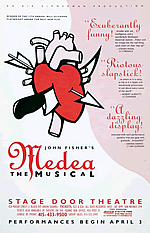 Medea the Musical |
 Special Forces |
||
 Queer Theory |
||
 Amnesia |
 Boadecia |
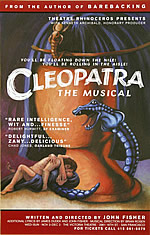 Cleopatra the Musical |
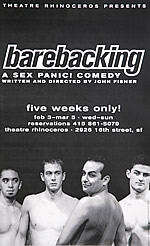 Barebacking |
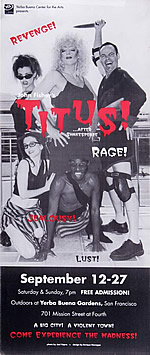 Titus |
 Combat |
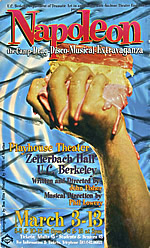 Napoleon |
 History of Homosexuality in Six Scenes |
|